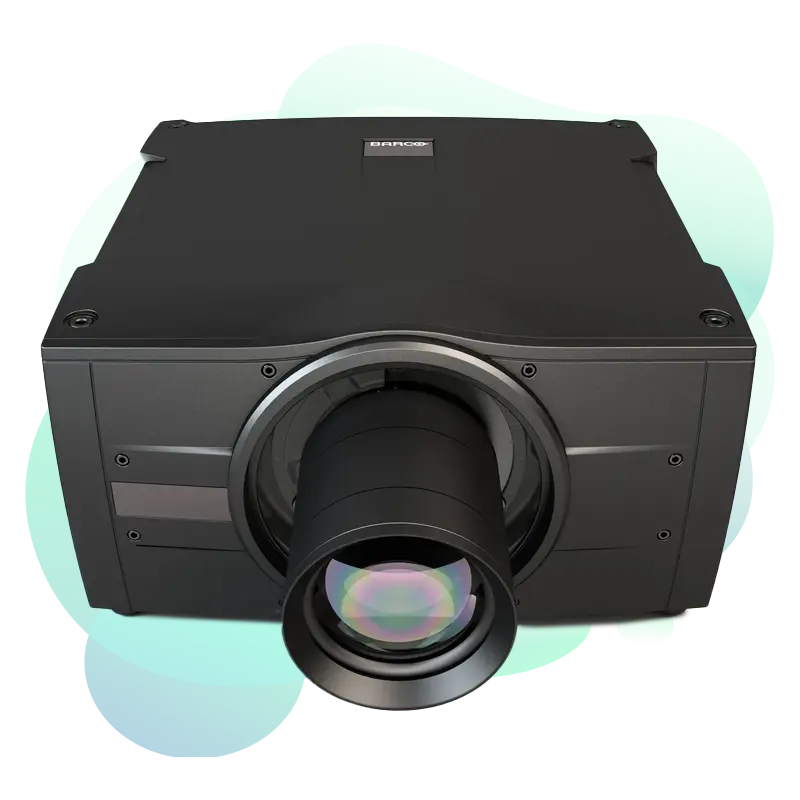

Bragi / Bragi CS
Barco Residential Bragi & Bragi CinemaScope RGB LED Projector
Compact RGB LED projector available in two versions: the Bragi (4K UHD, 16:9, 3,840 x 2,160, up to 2,600 lumens) and the Bragi CS (CinemaScope, 2.37:1, 5,120 x 2,160, up to 2,200 lumens). Both use Barco's HLD RGB LED engine and Pulse electronics in a compact 21.5 kg chassis.
Overview
The Barco Bragi takes its name from the ninth-century Norse poet so renowned for his verse that legend holds Odin appointed him the court poet of Valhalla after his death. Fittingly, the Bragi occupies a quietly remarkable position in the Barco Residential lineup: Balder's smaller sibling, inheriting the same optical core, Pulse electronics platform, aluminium and magnesium chassis, and full lens ecosystem — but powered by an entirely different and highly distinctive light source. Where the Balder uses laser phosphor, the Bragi introduces Barco's High Lumens Density (HLD) RGB LED engine. HLD LED is not conventional LED illumination; it works around the law of etendue to deliver saturated colour, precise white point control, and up to 2,600 ANSI lumens in a package that runs cooler, quieter, and more efficiently than its laser siblings. HLD LED colours appear more saturated to the human eye, producing richer, more vivid images than the raw measurements alone suggest. The Bragi also includes a motorized DCI/P3 filter for improved HDR colour accuracy, and Barco's P7 RealColor processing enables simple, accurate calibration to any desired colour gamut or white point. Light source lifespan is rated up to 50,000 hours. Like the Balder, the Bragi is offered in two distinct variants. The standard **Bragi** features a native 4K UHD resolution of 3,840 x 2,160 at 16:9 for widescreen rooms and media spaces. The **Bragi CinemaScope (CS)** uses a native 5,120 x 2,160 chip at 2.37:1, purpose-built to fill a CinemaScope or scope screen natively — no anamorphic lens, no masking, no brightness penalty from letterboxing. The CS also includes an automatic aspect ratio detection system that crops and scales content from 1.78:1 to 2.39:1 seamlessly, with manual cropping available for subtitle support. Both share the same Pulse FPGA electronics, 8-lens FLDX ecosystem, 360° rotation capability, and Crestron/Control4/RTI/Savant integration — all in a compact chassis measuring 450 x 482 x 255mm and weighing just 21.5 kg.
YouTube
An independent video review of this component. Loading it connects to YouTube, which may receive device data and use cookies.
Downloads & Documentation
Pros & Cons
Strengths
- Two purpose-built variants: 16:9 (4K UHD) and 2.37:1 CinemaScope — the right tool for your screen format
- Bragi CS fills a scope screen natively at 5,120 x 2,160 with no anamorphic lens, maximising resolution and brightness on 2.35:1 screens
- HLD RGB LED delivers vivid, saturated colour that measures modestly but reads as richer to the eye
- Motorized internal DCI/P3 filter provides accurate HDR colour rendering without an external filter wheel
- Up to 50,000-hour light source lifespan with CLO — no lamp replacements, consistent brightness
- Compact and light (21.5 kg) relative to laser competitors at this performance level
- Barco Pulse electronics are class-leading for signal handling, latency, and integration
- 360° rotation and the full FLDX lens ecosystem provide exceptional installation flexibility
- Native Crestron, Control4, RTI, and Savant integration
- Quieter operation (30–33 dB) than the Balder, well suited to in-room ceiling mounting
Limitations
- At 2,200–2,600 lumens, best suited to smaller dedicated rooms; large screens (>140") need careful light control
- Pricing on application — not available at retail; requires an authorized Barco Residential dealer
- HDR10 only — no HDR10+ or Dolby Vision
- 1,800:1 sequential contrast is modest vs D-ILA competitors; excels in colour richness rather than absolute black levels
- No built-in streaming or smart features; requires a dedicated media source
- 3D requires additional hardware (not included)
Full Specifications
Display — Bragi (16:9)
Display — Bragi CinemaScope (CS)
Light Source
Optics & Lens
Electronics & Processing
Connectivity
Physical
Integrating the Barco Bragi into Your Home Cinema
The Barco Bragi represents a genuinely different approach to private cinema projection compared to the laser phosphor projectors that dominate the residential market. Its HLD RGB LED engine produces colour that feels alive and saturated — a character that reviewers consistently describe as immediately engaging on screen, even before calibration. At Kolosseum, we specify the Bragi when a client's room suits its strengths: a smaller dedicated cinema or media room, a 2.35:1 or 16:9 screen up to approximately 130–140" diagonal, and a preference for the long, maintenance-free lifespan that solid-state LED illumination provides. The choice between the Bragi and Bragi CS is, as with the Balder family, primarily about your screen format. For rooms designed around 16:9 widescreen viewing, the standard Bragi delivers 4K UHD at up to 2,600 lumens. For clients who want the full CinemaScope experience — a wide 2.35:1 scope screen that wraps the field of vision — the Bragi CS is the correct choice. Its native 5,120 x 2,160 chip fills the scope screen completely without any anamorphic attachment or masking inefficiency, and the automatic aspect ratio detection system handles the transition between content formats transparently.
Room Requirements
The Bragi is best suited to smaller dedicated cinema rooms or refined media spaces with screens from approximately 80" to 140" diagonal. For a 100" 16:9 screen, plan a throw distance of approximately 2.5m to 4.2m depending on the lens selected. The Bragi CS is designed around CinemaScope screens; use the Barco Residential Lens Calculator to determine throw for your specific scope screen width. Clearance requirements are: 1cm front and top, 1cm left, 25cm right, 25cm rear — more compact than the Balder. 360° rotation means the projector can be ceiling-mounted in any orientation. Power consumption of 570W max and quieter operation (30–33 dB) make the Bragi easier to integrate in-room without a dedicated projector closet, though acoustic isolation is still recommended in high-end builds.
Recommended Screen Pairing
For the standard Bragi (16:9), we recommend Stewart Filmscreen StudioTek 100 G4 or Screen Innovations Zero Edge at 1.0–1.3 gain in a dark room — the Bragi's colour character is best showcased on a neutral-white, unity-gain surface. For the Bragi CS, a scope-format screen such as Stewart Director's Choice or a custom Screen Innovations panel sized to your room's sight-lines will allow the native 5,120 x 2,160 image to be presented without compromise. Avoid high-gain screens; the Bragi's colour saturation advantage is best preserved on a diffuse, accurate surface.
Acoustic Considerations
At 30–33 dB(A), the Bragi is the quietest projector in the Barco Residential Pulse Series, making it genuinely suitable for ceiling mounting within a cinema room without a dedicated hush box in many installations. That said, for the highest-calibre builds we still recommend a projector closet or acoustic treatment around a ceiling-mounted unit to ensure fan noise does not register during quiet film passages. The Bragi's compact footprint and lower weight (21.5 kg vs 37 kg for the Balder) simplify both the ceiling mount hardware and any acoustic enclosure design.
Frequently Asked Questions About the Barco Residential Bragi & Bragi CinemaScope RGB LED Projector.
The key difference is native resolution and aspect ratio. The standard Bragi has a native 4K UHD resolution of 3,840 x 2,160 at 16:9 (1.78:1) — ideal for widescreen home cinemas and media rooms. The Bragi CinemaScope (CS) has a native resolution of 5,120 x 2,160 at 2.37:1, purpose-built for CinemaScope and scope screens (2.35:1 to 2.40:1). The CS also produces slightly lower brightness (up to 2,200 ANSI lumens vs 2,600 for the standard model) due to the wider chip area. Both share the same HLD RGB LED engine, Pulse electronics, lens range, chassis, and cooling system.
HLD (High Lumens Density) RGB LED is a solid-state light source that works around the law of etendue to deliver bright, highly saturated colour from a compact LED source. Unlike laser phosphor (which uses a blue laser to excite a yellow phosphor wheel to produce white light, then passes it through a colour wheel), HLD LED produces red, green, and blue light directly, resulting in a wider colour gamut, more saturated colours, and no colour wheel artifacts. In practice, HLD LED images appear richer and more vivid than raw DCI P3 measurements suggest. The trade-off is lower maximum brightness compared to Barco's laser phosphor models like the Balder.
No. The Bragi CS has a native 5,120 x 2,160 chip that projects a 2.37:1 CinemaScope image natively. No anamorphic lens or lens sled is required. The projector also includes an automatic aspect ratio detection system that crops and scales content between 1.78:1 and 2.39:1 automatically, with manual cropping available for subtitle support on scope content.
The HLD RGB LED light source is rated up to 50,000 hours, with Barco recommending a service check at 20,000 hours. At 4 hours of daily use, 50,000 hours represents over 34 years of operation before the source requires attention. Constant Light Output (CLO) ensures consistent brightness throughout the lifespan, unlike traditional lamp projectors that dim progressively.
The Bragi includes an internal motorized filter that can be switched in when displaying DCI P3 colour gamut content, such as HDR10 material. This filter constrains the HLD LED's broad colour output to the precise DCI P3 colour space, providing more accurate HDR colour rendering. For REC.709 content the filter is removed, allowing the full saturation of the HLD LED to come through. The filter is motorized so switching is seamless and can be automated by your control system.
Both are Barco Pulse Series projectors sharing the same electronics, lens ecosystem, chassis design, and CS variant option. The key differences are the light source and brightness. The Balder uses laser phosphor and delivers up to 7,000 ANSI lumens — suitable for larger screens (up to 180"+ in a dark room). The Bragi uses HLD RGB LED and delivers up to 2,600 lumens, better suited to smaller rooms and screens up to approximately 140". The Bragi produces more saturated, vivid colour; the Balder offers significantly more light output. For a smaller dedicated room, the Bragi is often the better and more cost-effective choice.
Yes. Barco provides certified driver modules for Crestron, Control4, RTI, and Savant. The Bragi also supports RS-232, IP control, IR, 12V trigger, and DMX (in and out), providing comprehensive integration options for custom installation environments.
With up to 2,600 ANSI lumens (standard Bragi) or 2,200 lumens (Bragi CS), the Bragi is well suited to screens from 80" to approximately 130–140" diagonal in a dedicated, light-controlled room. For a 100" screen, plan a throw distance of approximately 2.5m to 4.2m depending on the lens selected. For screens larger than 140", consider the Barco Balder for its significantly higher light output.
We consider the Bragi and Bragi CS during the design phase of your cinema or media room project, evaluating screen format, room dimensions, throw distance, and ambient light control requirements. We determine whether the standard or CS variant is appropriate for your screen, select the correct lens using the Barco Residential Lens Calculator, and design the projector mounting and ventilation for the installation. We also perform P7 RealColor calibration on-site, including DCI P3 filter alignment for HDR content accuracy.
Compare Alternative Projectors.
Balder / Balder CS
Laser phosphor projector available in two versions: the Balder (4K UHD, 16:9, 3,840 x 2,160) and the Balder CinemaScope CS (native 2.37:1 scope, 5,120 x 2,160). Both deliver up to 7,000 ANSI lumens via Barco's Pulse electronics and Loki-derived optics. Choose the standard model for 16:9 screens, or the CS to fill a 2.35:1 scope screen natively without anamorphic lenses.
View Details →Nerthus
DCI-certified 4K RGB laser cinema projector with 32,000 lumens and 100% Rec.2020 color. Designed for the most demanding private screening rooms. Features Barco Alchemy ICMP-X media processor and Active Image Management. Pricing on application.
View Details →Freya MKII SST
Three-chip DLP RGB laser projector with native 4K DCI (4,096 x 2,160), 7,500 ANSI lumens, 8,000:1 sequential contrast, and 100% Rec.2020 colour gamut. Features the Barco Alchemy ICMP-X media processor with 12TB integrated storage. DCI-compliant Cinema at Home Series. Pricing on application.
View Details →Heimdall / Heimdall CS / Heimdall+ / Heimdall+ CS
Next-generation Pulse Series RGB laser projector family in four variants: Heimdall and Heimdall+ (4K, 16:9, 4,096 x 2,176) and their CinemaScope counterparts (2.37:1, 5,120 x 2,160) — all with direct RGB laser, 98% Rec.2020, DynaBlack dynamic contrast up to 20,000:1, HDMI 2.1 with 4K/120Hz, and 25,000-hour laser lifespan. CS models fill a 2.35:1 scope screen natively with no anamorphic lens required.
View Details →DLA-NZ700
Native 4K D-ILA laser projector with 2,300 lumens, 80,000:1 native contrast, and Gen2 Frame Adapt HDR. Features BLU-Escent laser phosphor light source, HDR10+ support, and a fully motorized 80mm 4K lens. ISF Certified with JVC Auto Calibration for reference-grade home cinema performance.
View Details →BRAVIA Projector 7 (VPL-XW5100ES)
Native 4K SXRD laser projector with 2,200 ANSI lumens. Features Sony's XR Processor for projector, Cinema Black Pro, XR Dynamic Tone Mapping, and Aspect Ratio Scaling for easy 2.35:1 to 16:9 switching.
View Details →Ready to Design Your Cinema Around the Bragi / Bragi CS?
Kolosseum is an independent design consultancy, not a retailer. We design the complete cinema experience and connect you with authorized dealers for purchase and professional installation.
Tell us about your room, your budget, and your vision. We will create a complete cinema design that integrates the Barco Residential Bragi & Bragi CinemaScope RGB LED Projector with the right screen, speakers, acoustics, and seating.