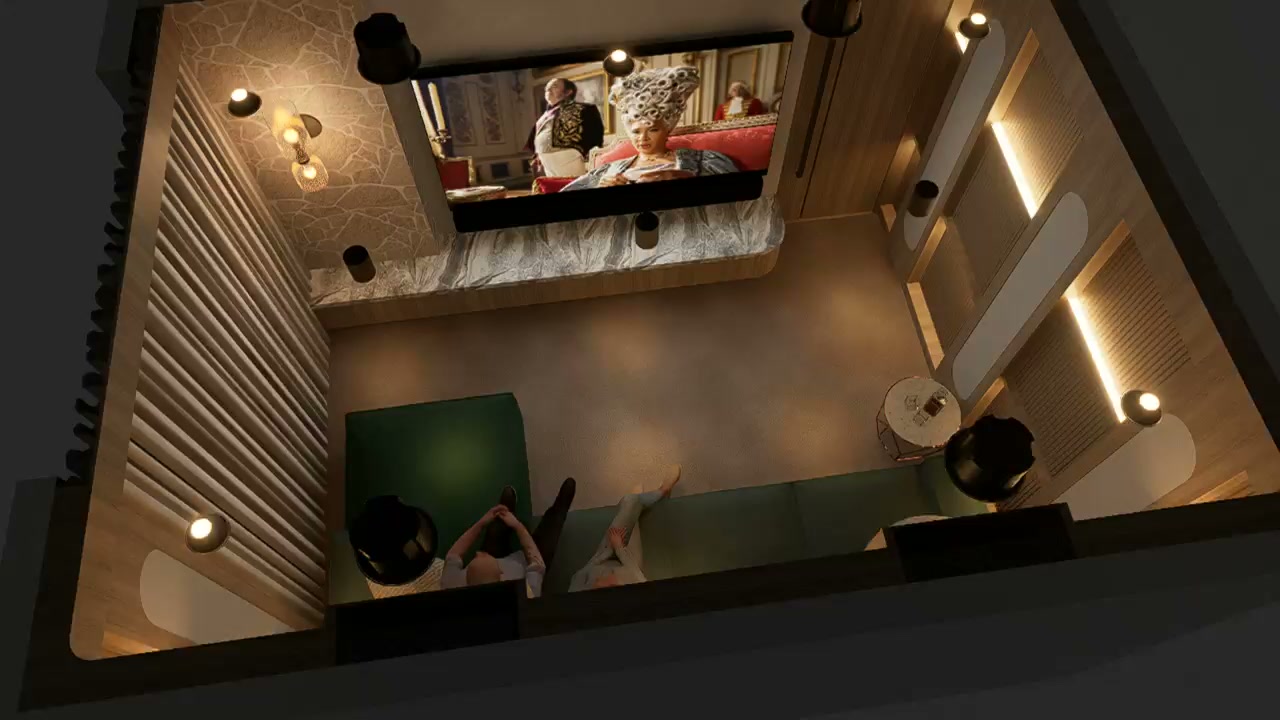
Level 1
“The minimum level of performance necessary to convey basic artistic intent”
The film works. Dialogue is clear, bass is present.
Independent engineering for rooms that have to look right, perform measurably and be buildable by the team you choose. Seats, screen, speaker axes, acoustics and construction are resolved before a proposal becomes concrete.
Design documentation from A$2,199.
You are qualified to make all four. We turn the answers into geometry, a performance brief and the right starting documentation scope.
Your starting scope
0 of 4 decisions made
Complete the four decisions and we will recommend a documentation package with the reason, not just a product name.
The performance level is what the room is aiming at. The documentation depth is how much drawing it takes to get there.
A modest two-row room chasing Level 3 needs more documentation than a large room content at Level 1. Price follows the drawing, not the ambition.
Axis 1 · Immersive audio
CEDIA/CTA-RP22 is the public recommended practice for immersive-audio design. Its four levels describe audio performance quality, not the depth of the drawing package.
Level 1
“The minimum level of performance necessary to convey basic artistic intent”
The film works. Dialogue is clear, bass is present.
Level 2
“A higher level of performance that more accurately conveys artistic intent”
You stop noticing the system and start noticing the film.
Level 3
“Meets or exceeds reference commercial cinema exhibition standards”
Targets the reference commercial-cinema benchmark defined by RP22.
Level 4
“The maximum level of achievable performance across every parameter”
Targets the most demanding value across every RP22 parameter.
These four levels are not ours. They are a free, publicly downloadable recommended practice, which means you can check our work against them. That is the point of using them.
RP22 defines 21 criteria across those four levels. Some can inform design-stage prediction; others require specified or measured evidence. Completed-room assessment needs documented measurements and an explicit verification method.
Axis 2 · Kolosseum drawing product
Price follows the drawing

Up to two rows.
The set an installer executes rather than improvises.
A$2,199

Up to three rows, and you see it before it is built.
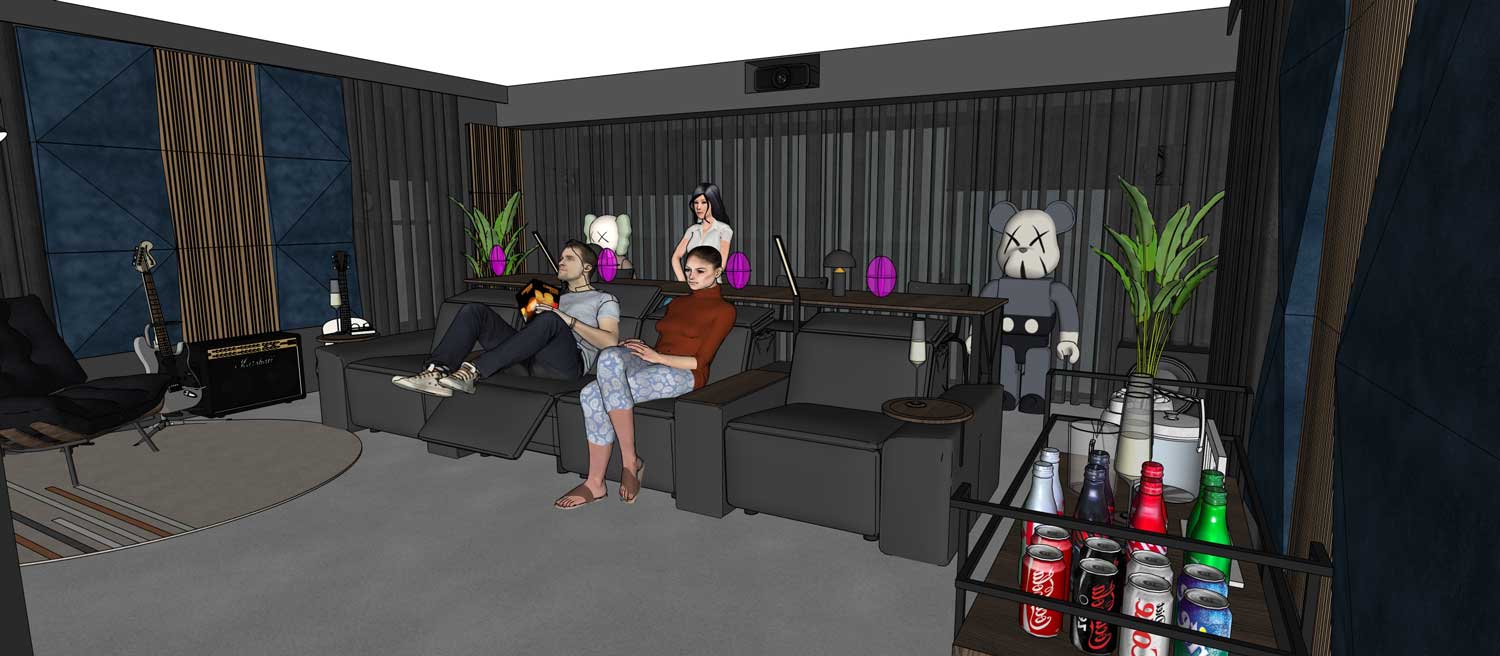
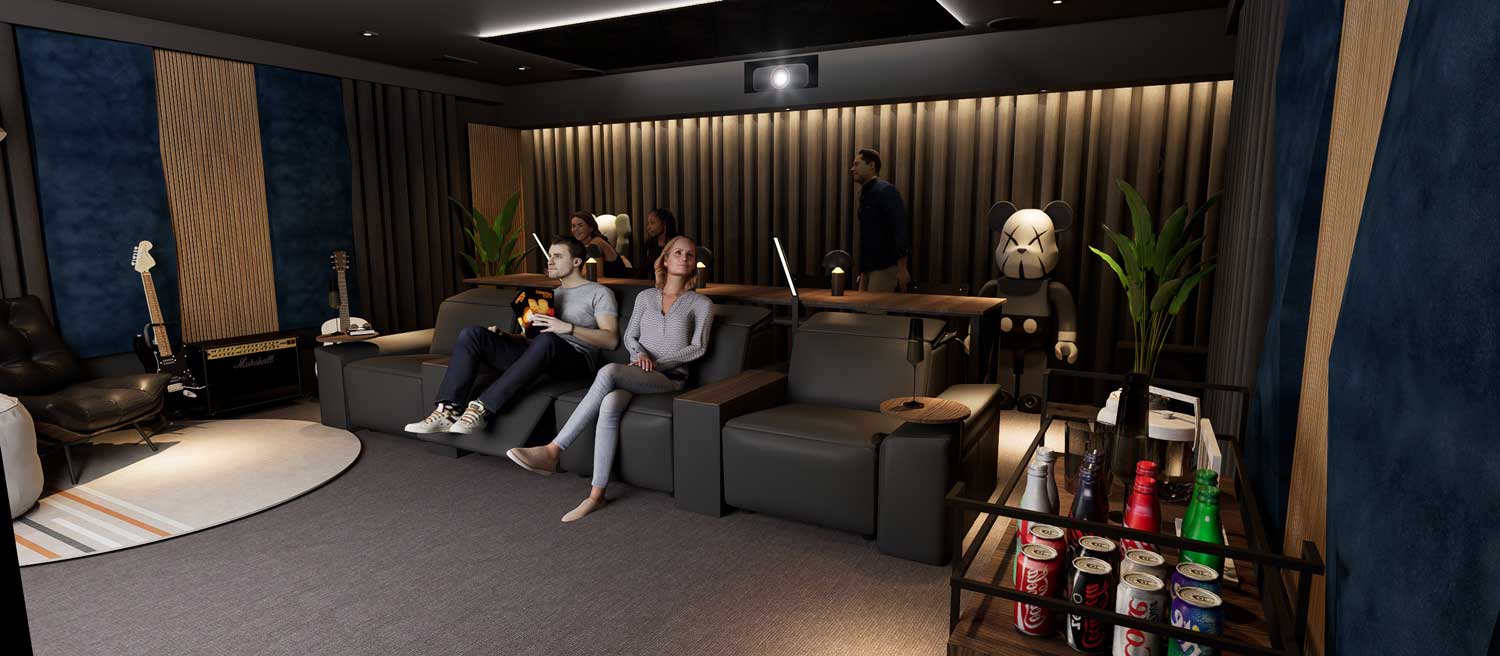
The render resolves sightlines and finishes before the joinery is set.
A$3,299

Unconstrained geometry, evaluated against relevant RP22 design criteria.
To 17.8.10 and beyond.
A$4,499
The render is not the evidence by itself. The geometry, pressure model, drawings and room all have to describe the same design.
Appointed by you, we provide independent counsel before money is committed.
Appointed by your project team, we issue the same engineering under their title block. See white-label delivery.
Match the drawing set to the room, not to a vague rank. The performance target is chosen separately.
Issued as Katio
The set an installer executes rather than improvises.
Issued as Kelsus
The render resolves sightlines and finishes before the joinery is set.
Issued as Kassius
To 17.8.10 and beyond.
Design, Oversight & Verification
A complete turnkey cinema solution for clients who require something beyond a standard engagement. By invitation only.
RP22 is the floor, not the ceiling.
Typical Total Project Range
A$150,000 - A$1,000,000+
Indicative Design Fee
YouTube
The RP XXII cinema film. Loading it connects to YouTube, which may receive device data and use cookies.
How a $500K+ Cinema is Engineered Around RP22 Audio Targets
| Deliverable | Katio A$2,199 | Kelsus A$3,299 | Kassius A$4,499 |
|---|---|---|---|
| Room acoustics assessment | |||
| Basic speaker positioning | |||
| Equipment rack layout | |||
| Cable pathway planning | |||
| Preliminary budget estimate | |||
| Detailed acoustic treatment plan | |||
| Full speaker & subwoofer layout | |||
| Amplification & processing specs | |||
| Calibration guidelines | |||
| 3D visualisation render | |||
| Custom speaker baffle-wall design | |||
| Full construction CAD sets | |||
| Acoustic measurements & tuning | |||
| Commissioning protocol | |||
| RP22-informed design-stage analysis | |||
| Details | Details | Details |
Choose the documentation depth that matches the project risk.
Request a sample setSix outcomes, not ten administrative steps. Select a stage to see what exists when it is complete.
Stage 00 · Before we meet
Share your own Pinterest board with us: seating, timber, stone, lighting, colour, and the rooms you keep returning to. Send it before the first conversation.
It tells us in five minutes what an hour of questions would not, and gives every later design decision a reason.
01 · The conversation
You describe the room. We tell you what is actually possible in it.
What exists at the end
An honest constraint list
What we need from you
CEDIA/CTA-RP22 gives the project team a public language for immersive audio performance. We use it as a target at design stage and distinguish that clearly from verification after commissioning.
Understand RP22Many integrators design well. The question is not whether a drawing exists. The question is whether one accountable design basis coordinates the room, the performance target, the architecture, the services, the trades and the final verification. Kolosseum can be appointed directly or engaged confidentially as the integrator's design partner.
An equipment proposal defines what will be supplied. A professional design appointment defines what the complete room must achieve, how it will be built and how the result will be judged. Keeping that scope visible makes the accountability visible.
Most often, an integrator appoints us as a confidential design partner. We are also happy to be appointed by a client, architect, builder or another project party that understands the value of independent engineering. One party appoints us, and we coordinate the room, technology, services and documentation for the wider project team.
No. We are a design-only consultancy. This independence is our core value proposition; it ensures every recommendation is made purely on technical merit and project goals, not on dealer margins or stock levels. We are paid to protect the outcome, not to sell the parts.
Yes. We first ask about the room, performance target, visual direction and budget. We can then suggest suitable equipment, seating, acoustic finishes, fabrics, timber, lighting and other interior elements. We explain what we know and why each option may work, then you and your project team review the choices and decide.
A purpose-built dedicated cinema in Australia commonly begins around A$50,000 installed and scales with room size, isolation, acoustic treatment, speaker architecture, projection and finish. Kolosseum's documentation fees begin at A$2,199 and are separate from equipment and installation. Comparing quotes only becomes useful once each one answers the same performance brief.
Before the slab is poured is ideal. Room dimensions, wall build-up, door positions, HVAC routes, conduits and structure are inexpensive to resolve on a drawing and expensive to recover after construction. Retrofits remain possible, but the earlier the design begins, the fewer compromises the room inherits.