Level 1
“The minimum level of performance necessary to convey basic artistic intent”
The film works. Dialogue is clear, bass is present.
CEDIA is the global association for smart home professionals. Kolosseum is a member and an advocate for clearer recommended-practice language, individual credentials and a stronger APAC community.
CEDIA (Custom Electronic Design & Installation Association) is a global trade association for companies and people who design, specify and install residential technology. It convenes education, certification, awards and recommended-practice development across the industry.
Kolosseum is a long-standing CEDIA member. Our founder serves as a CEDIA Global Awards Judge, reviewing complex completed installations and contributing to the elevation of practice across the industry.
Kolosseum uses CEDIA Recommended Practices where they apply, records the target at design stage, and keeps that claim separate from post-installation verification. A drawing can predict a result; only the completed room can prove it.
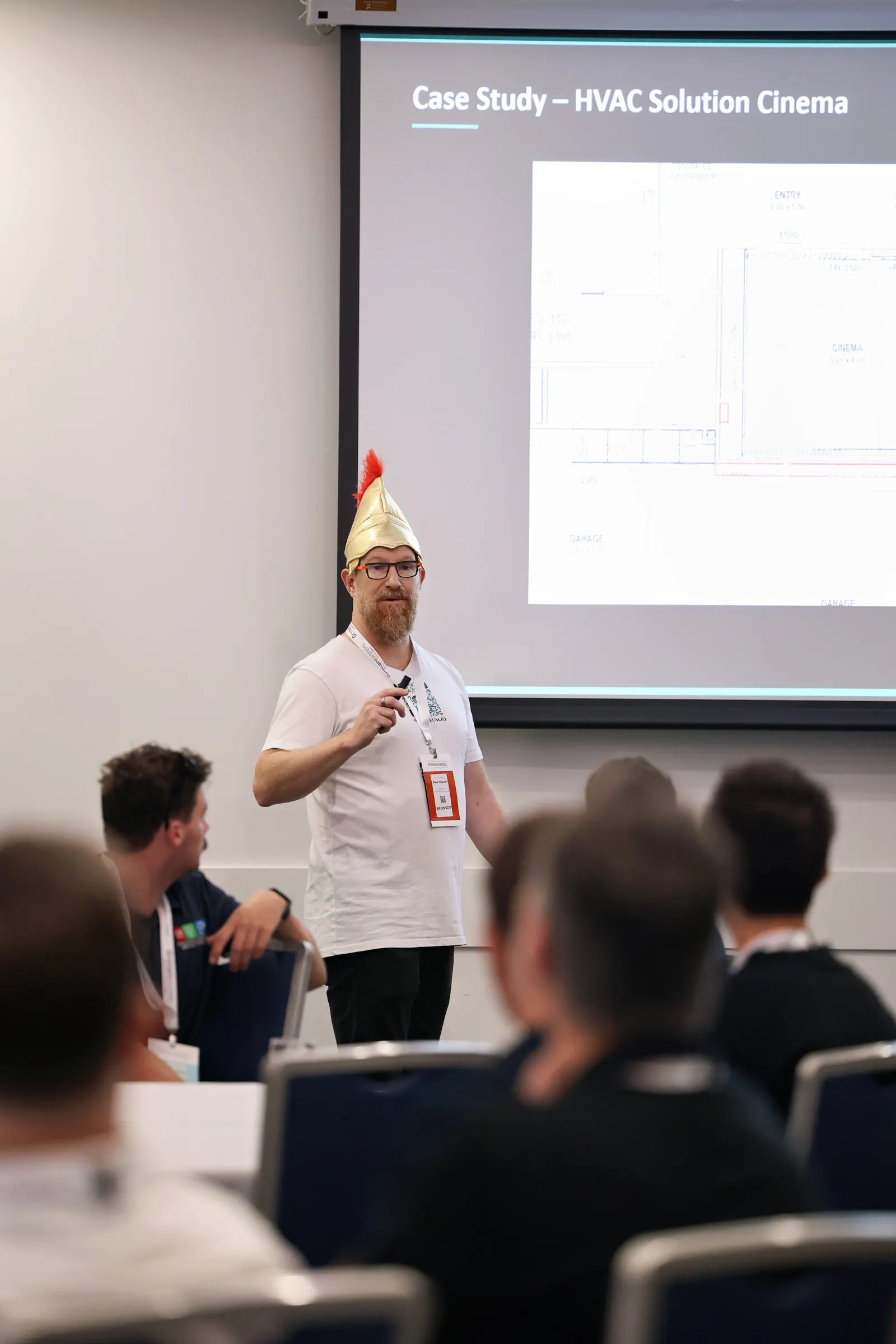
Paul McLean, CEDIA industry lecture, APAC region
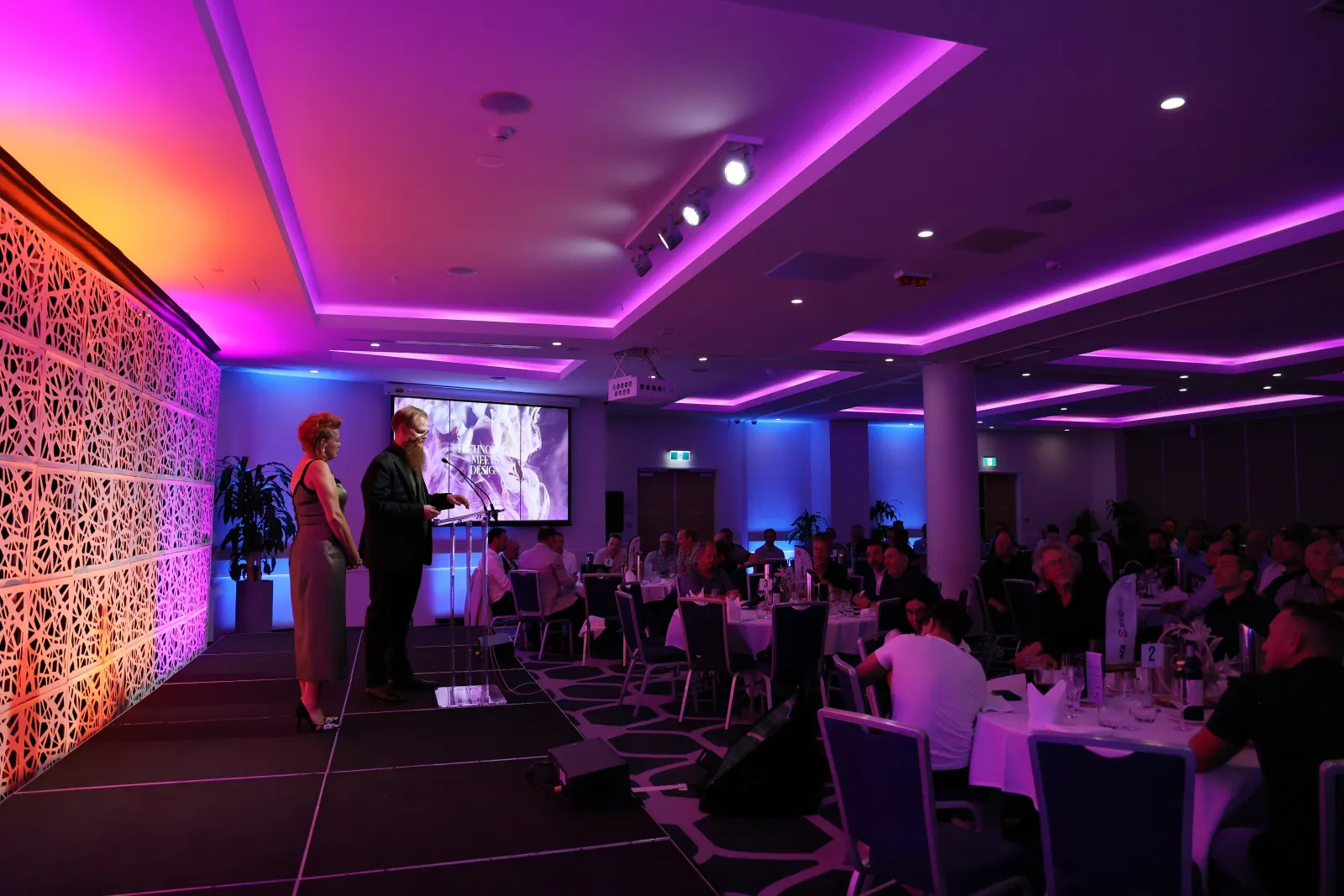
CEDIA APAC Smart Home Awards
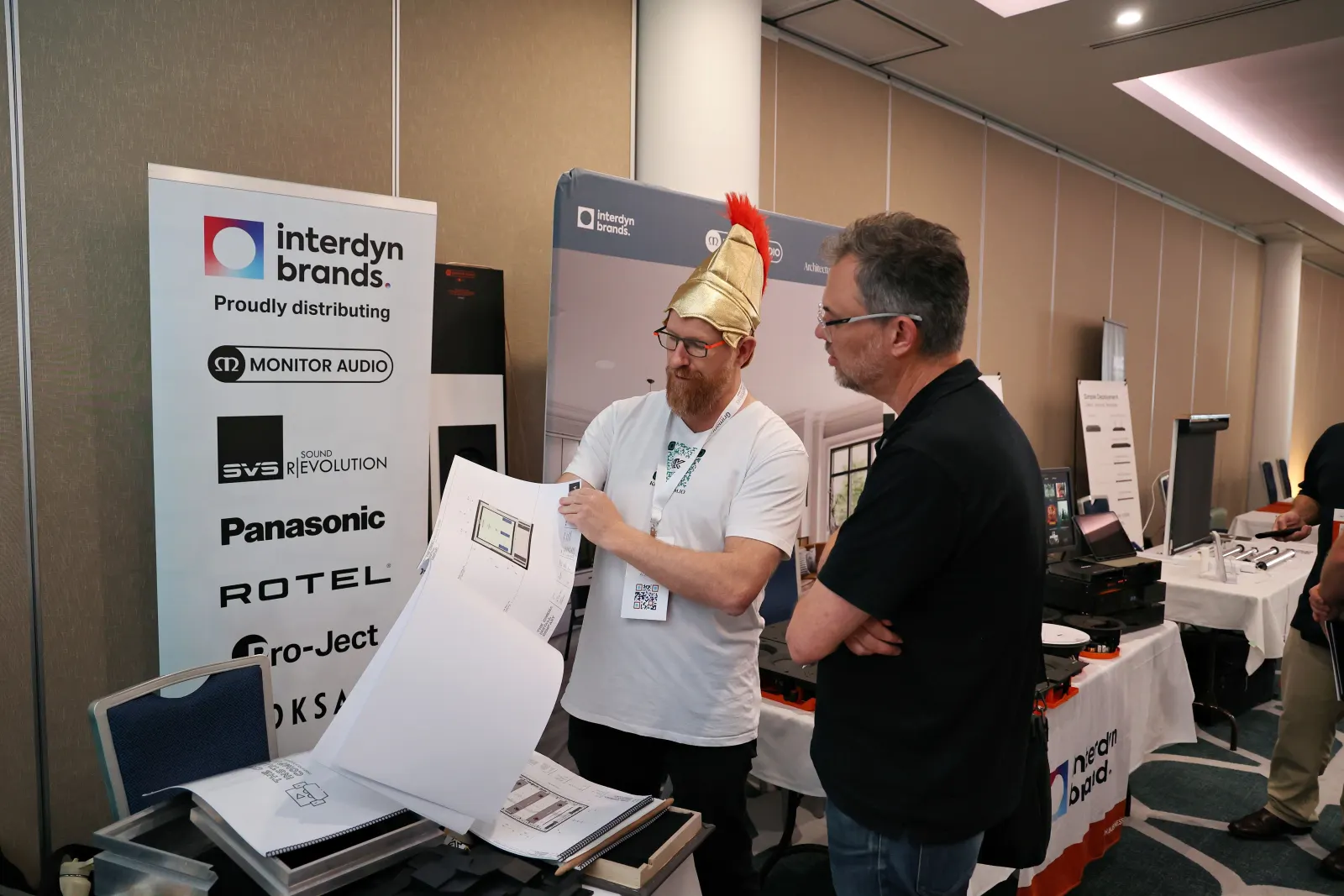
CEDIA Industry Event
Published recommended practices provide a shared technical language. Draft work is identified as draft; neither status certifies a company or a room.
A public recommended practice for immersive-audio design. It defines four performance levels and 21 parameters spanning room geometry, speaker fields, clean output, noise and response consistency.
The companion immersive-video recommended practice remains in development. Draft material should not be presented as finished requirements until CEDIA and CTA publish it.
The foundational practice establishing how manufacturer data is interpreted and applied in system design, ensuring that equipment selection is grounded in verified performance specifications rather than marketing material.
Recommended practice for the structured testing and verification of installed systems. Defines what a completed project actually looks like, measurement protocols, acceptance criteria, and sign-off documentation.
These four levels are not ours. They are a free, publicly downloadable recommended practice, which means you can check our work against them. That is the point of using them.
Level 1
“The minimum level of performance necessary to convey basic artistic intent”
The film works. Dialogue is clear, bass is present.
Level 2
“A higher level of performance that more accurately conveys artistic intent”
You stop noticing the system and start noticing the film.
Level 3
“Meets or exceeds reference commercial cinema exhibition standards”
Targets the reference commercial-cinema benchmark defined by RP22.
Level 4
“The maximum level of achievable performance across every parameter”
Targets the most demanding value across every RP22 parameter.
21
RP22 defines 21 criteria across those four levels. Some can inform design-stage prediction; others require specified or measured evidence. Completed-room assessment needs documented measurements and an explicit verification method.
11Spatial resolution
Where listeners and speakers sit, how evenly the speaker field reaches each seat, and whether sound can move around and above the room without gaps.
4Dynamics
Whether screen, surround and bass channels can reach the required output cleanly, above the room's background noise.
6Timbre
Frequency-response consistency, bass extension, target-curve accuracy and control of the early reflections that blur direct sound.
A company participates in CEDIA's industry community.
An individual holds a tested professional credential.
A proposed room is modelled against a stated RP22 level.
The completed room is measured against what the design promised.
CEDIA/CTA-RP23, the companion recommended practice for immersive video, remains in development. We track the work as it matures, but do not present draft material as published requirements.
Download RP22 from CEDIACEDIA certifications are held by the person, not the company. The CIT and IST certifications shown here are ANAB-accredited to ISO/IEC 17024 and are maintained through CEDIA's renewal requirements.
Cabling & Infrastructure Technician
The CIT certification is the foundational credential for smart home technicians. It validates competence in the physical infrastructure layer, cable selection, termination practices, conduit management, and low-voltage wiring to best-practice standards. ANAB-accredited to ISO/IEC 17024.
What it means in practice
A CIT-certified technician is qualified to perform all infrastructure wiring for limited-energy technology systems in residential and commercial settings to a verified, consistent standard.
Integrated Systems Technician
The IST is the professional-level credential for integrators who work independently across the full lifecycle of an installation, from first fix (pre-wire) through trim-out (second fix) and system verification. ANAB-accredited to ISO/IEC 17024.
What it means in practice
An IST-certified technician can mount, install, and commission a wide range of home technology equipment, troubleshoot common failures, and verify system functionality against the design intent.
Membership connects a company to education, industry peers, awards and standards-development work. It does not certify every employee or verify every installation.
Membership shows that a company participates in CEDIA's professional community. Individual certification is separate evidence of tested competence.
RP22 is publicly downloadable. Membership adds education, working-group participation and a route into the conversations shaping future practice.
CEDIA's Smart Home Awards recognise completed work across the residential technology industry and give peers a shared body of work to examine.
Connect with the APAC community of integrators, manufacturers, and educators. The relationships formed through CEDIA are the ones that define long careers.
CEDIA's Design & Build outreach programme positions members in front of architects, interior designers, and project managers, the people who specify systems before a client is even selected.
From online learning to in-person training and formal certification, CEDIA provides the educational infrastructure that turns a tradesperson into a recognised professional.
Paul Skelton is CEDIA's APAC representative and the person to speak to about membership in Australia and the broader Asia-Pacific region. Kolosseum has worked alongside Paul and the CEDIA APAC team for years, we are confident in making the introduction.